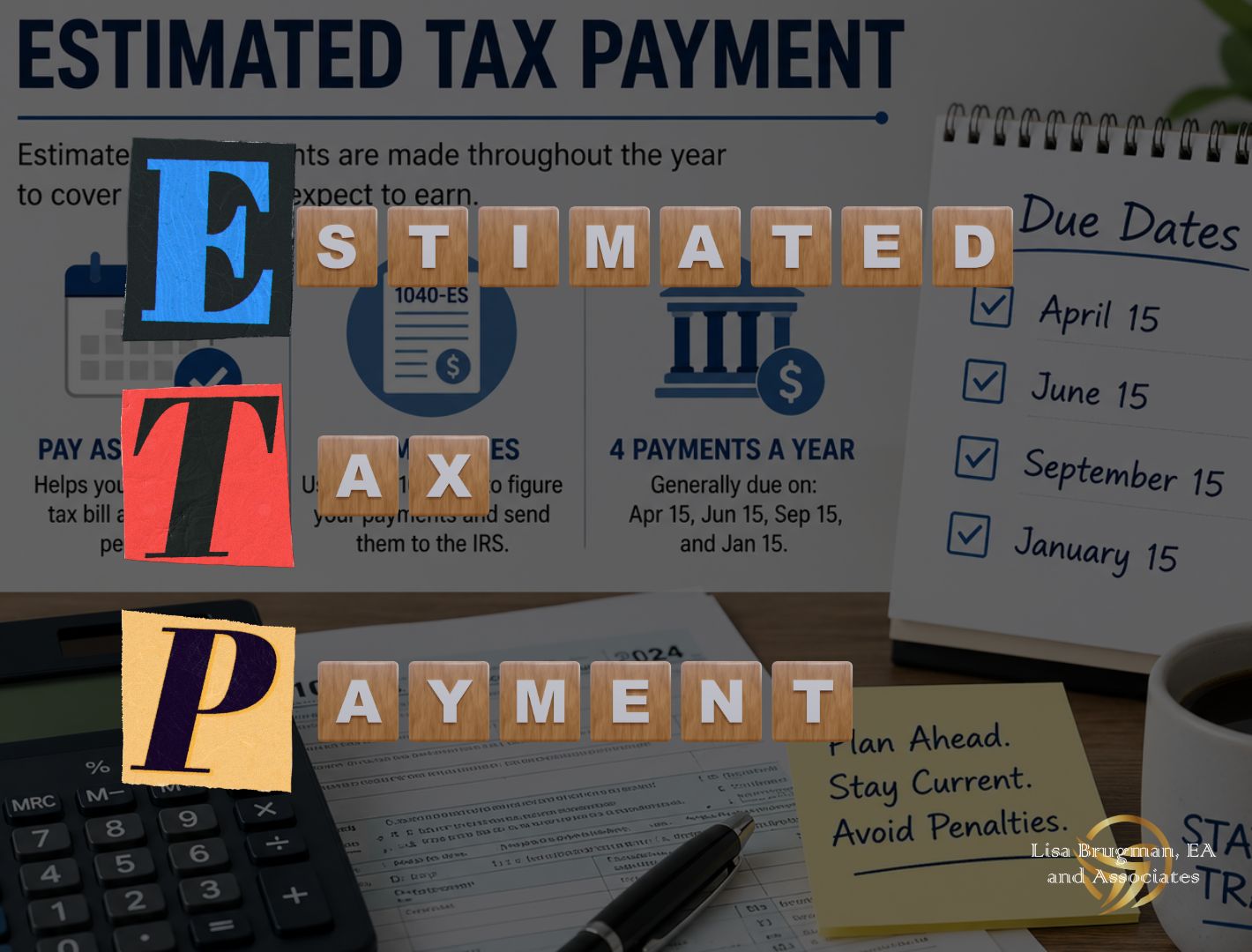
What Happens if You Missed a Quarterly Estimated Payment?
💰 Missed a Quarterly Estimated Tax Payment? Here's What to Do
Life happens.
Maybe business was busier than expected. Maybe cash flow was tight. Or maybe the estimated tax payment deadline simply slipped through the cracks.
If you've missed a quarterly estimated tax payment, don't panic. You're not alone, and in many cases, there are steps you can take to minimize the damage.
Let's start with the basics.
What Are Estimated Tax Payments?
The U.S. tax system operates on a "pay-as-you-go" basis.
That means the IRS expects taxpayers to pay taxes throughout the year as income is earned—not wait until tax season to pay everything at once.
For employees, this usually happens automatically through payroll withholding.
But if you're:
✔️ Self-employed
✔️ A business owner
✔️ A real estate investor
✔️ Receiving dividends, interest, capital gains, or rental income
You may need to make quarterly estimated tax payments yourself.
Why Estimated Payments Matter
There are two major reasons to stay current on estimated taxes.
1️⃣ Avoid a Big Tax Bill
Without estimated payments, it's easy to arrive at tax season and discover you owe thousands—or even tens of thousands—of dollars.
Making payments throughout the year spreads that obligation out and helps avoid unpleasant surprises.
2️⃣ Avoid IRS Penalties and Interest
The IRS doesn't just want the tax paid.
They want it paid on time.
If you don't make sufficient payments during the year, the IRS may assess:
⚠️ Underpayment penalties
⚠️ Interest charges
Even if you eventually pay the balance in full.
What Happens If You Miss a Payment?
The good news?
Missing a quarterly payment doesn't mean you're in trouble forever.
The best thing you can do is:
👉 Make the payment as soon as possible.
The sooner you pay, the less potential penalty and interest you may face.
You can typically make payments directly through the IRS online payment system or by mailing a payment with the appropriate voucher.
Can You Fix a Missed Payment?
Sometimes, yes.
Depending on your situation, you may be able to reduce or eliminate penalties by:
✔️ Increasing withholding from wages
✔️ Increasing withholding from retirement distributions
✔️ Catching up on missed payments later in the year
The IRS treats withholding differently from estimated payments, which can sometimes create planning opportunities.
You May Qualify for Penalty Relief
Some taxpayers qualify for reduced penalties or waivers.
For example:
✔️ Certain retirees
✔️ Taxpayers who became disabled
✔️ Taxpayers with uneven income throughout the year
✔️ Taxpayers who meet IRS safe harbor requirements
Every situation is different, so it's important to review the numbers carefully before assuming a penalty applies.
The IRS Safe Harbor Rules
Many taxpayers can avoid estimated tax penalties entirely if they satisfy certain IRS safe harbor rules.
These rules can be especially valuable for:
💼 Business owners
🏠 Real estate investors
📈 Individuals with fluctuating income
However, the calculations can become complicated quickly, particularly when income changes significantly from year to year.
Don't Ignore the Problem
One of the biggest mistakes taxpayers make is assuming they'll "deal with it later."
Unfortunately, penalties and interest continue to accumulate.
The earlier you address the issue, the more options you typically have available.
Key Takeaways
✔️ Estimated taxes help you stay current with IRS payment requirements.
✔️ Missing a payment doesn't automatically create a disaster.
✔️ Making a payment as soon as possible can help reduce penalties and interest.
✔️ Certain taxpayers may qualify for penalty relief or safe harbor protection.
✔️ Planning ahead is usually less expensive than fixing the problem later.
Final Thoughts
Missing a quarterly estimated tax payment can feel stressful, but it's often fixable with the right strategy.
The key is understanding your options before penalties and interest continue to grow.
👉 If you've missed an estimated tax payment—or you're unsure whether you're making enough payments throughout the year—book a call with Lisa Brugman, EA & Associates.
We'll help you evaluate your situation, minimize potential penalties, and create a tax plan that keeps you on track moving forward.


